
Helpneer brings live chat, ticketing, visitor intelligence, granular RBAC, and seat-based billing into a single crisp interface — with true multi-brand data isolation built from day one.
Trusted by multi-brand DTC storefronts, B2B SaaS, and support teams
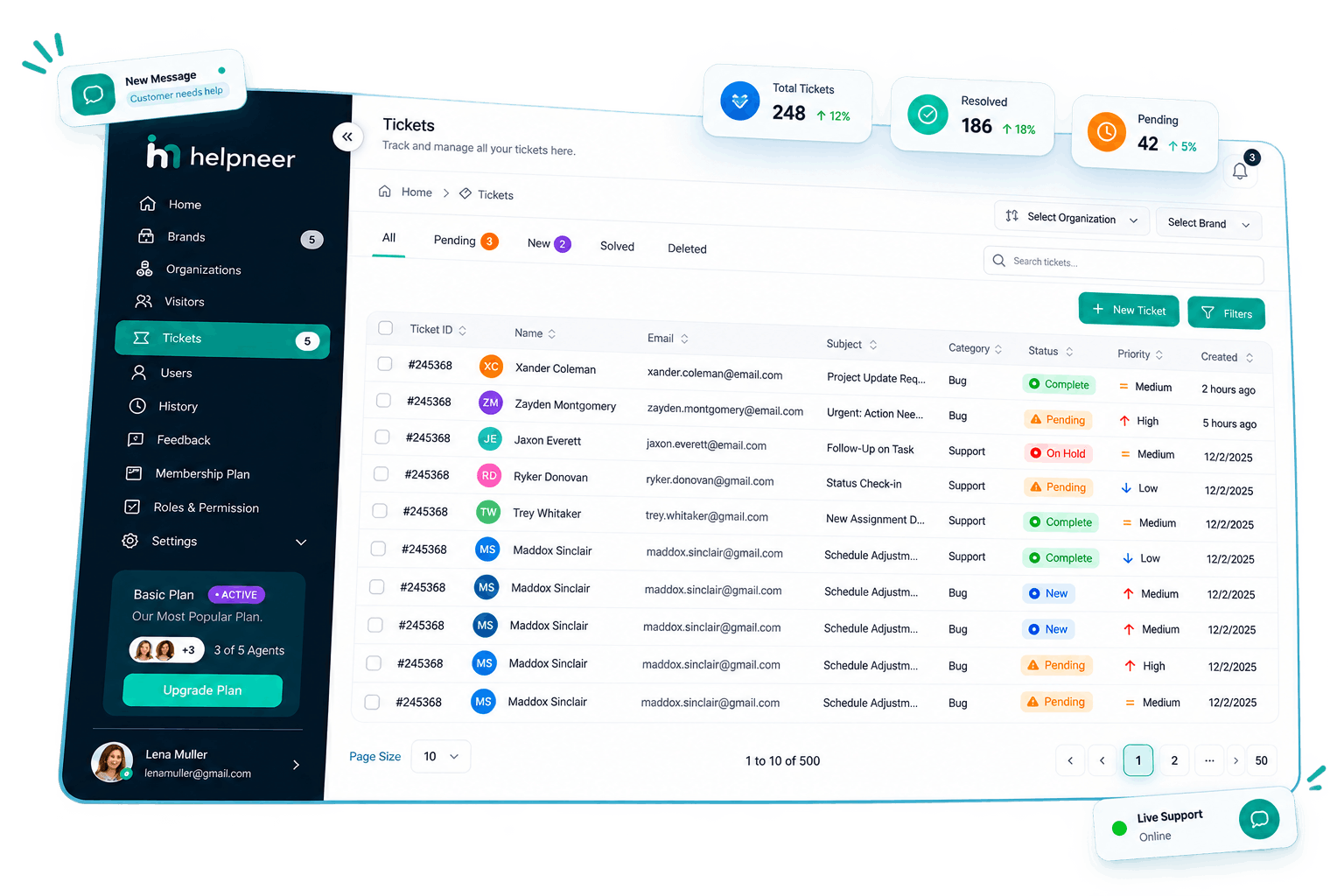
Platform Summary & Architecture Overview
Helpneer is a unified, self-hostable customer support platform combining live chat, ticketing, visitor tracking, subscription billing, and multi-brand role-based access control (RBAC). Designed for multi-brand storefronts and B2B SaaS teams, Helpneer runs on a single native data schema and can be deployed via Cloud SaaS, Docker Compose, or Kubernetes with Helm charts.
Cohesive Architecture
Everything modern support teams need — engineered to share one native schema instead of being bolted on across three disconnected vendors.
Shadow-DOM isolated, zero-conflict widget with live typing indicators, read receipts, and visitor telemetry so agents have full context before typing.
Learn moreEscalate any live chat into a tracked, prioritized ticket instantly without lost chat transcripts or duplicate customer records.
Learn moreGrant View / Create / Update / Delete rights per module and role. Security permissions update instantly over live WebSockets.
Learn moreHierarchical organizations with brand-scoped widgets, custom routing, and isolated reporting. Zero cross-brand data leaks.
Learn morePredictable seat-based pricing with Stripe self-serve controls. Add or remove seats anytime with zero per-ticket penalties.
Learn moreDeploy in our managed cloud, run locally in Docker Compose, or scale across your private Kubernetes cluster with included Helm charts.
Learn moreBrand-specific LLM assistants that answer 24/7, escalate to humans with full summaries, and only use your business data.
Learn moreOfficial WhatsApp Business API with two-way ticket sync. Agents reply from one dashboard; customers receive messages on WhatsApp.
Learn moreWhy Helpneer
Intercom, Zendesk, Front, and Crisp each solve a disconnected slice. Helpneer unites live chat, ticketing, visitor intel, and billing on one cohesive foundation.
Compare plansUnified visitor-to-ticket pipeline
Chat, visitor intel, and tickets on one schema — no broken contexts or duplicate records.
Permissions that match your org chart
Granular View / Create / Update / Delete per module — not the coarse Admin/Agent split.
Multi-brand without multiple accounts
Hierarchical org → brand structure with per-brand widgets, routing, and reporting.
Event-driven, self-hostable core
Kafka-based microservices you can run in Docker Compose or Kubernetes.
8
modules on one native data model
4
plan tiers, predictable seat pricing
Common questions about Helpneer's platform and features.
Helpneer combines chat, ticketing, visitor tracking, and billing on a single unified data model. Unlike competitors that bolt together separate tools, everything in Helpneer shares the same schema—no sync issues, no data duplication, and true multi-brand isolation.
Yes. Helpneer is designed for self-hosting with Docker Compose for local/small deployments and Helm charts for production Kubernetes environments. You maintain full control over your data and infrastructure.
Helpneer supports hierarchical organizations with nested brands. Each brand has its own widgets, routing rules, agent assignments, and reporting. One login gives you access to all brands, with complete data isolation between them.
We offer four tiers: Free (limited seats), Starter (growing teams), Professional (scale-up), and Enterprise (custom). Each tier unlocks more features and higher seat limits. You can upgrade or downgrade anytime with prorated billing.
Helpneer uses resource-level RBAC. You can grant View, Create, Update, or Delete permissions per module (chat, tickets, billing, settings) and per role. Permission changes propagate instantly over WebSocket.
Free plan available. No credit card required.